|
International
Tables for Crystallography Volume I X-ray absorption spectroscopy and related techniques Edited by C. T. Chantler, F. Boscherini and B. Bunker © International Union of Crystallography 2021 |
International Tables for Crystallography (2021). Vol. I. ch. 8.5, pp. 952-957
https://doi.org/10.1107/S1574870720003559 Chapter 8.5. Liquids, glasses and amorphous solidsaPhysics Division, School of Science and Technology, Università degli Studi di Camerino, Via Madonna delle Carceri, I-62032 Camerino, MC, Italy, and bDipartimento di Scienze Fisiche e Chimiche, Università degli Studi dell'Aquila, Via Vetoio, I-67100 L'Aquila, Italy The nature of the structural information that can be obtained by XAFS in disordered (amorphous, liquid and glassy) systems is discussed with emphasis on the physical processes and current computational approximations and compared with established diffraction techniques. Early results and applications as well as more recent achievements are briefly reviewed. Keywords: disordered systems; liquids; EXAFS. |
The photoabsorption process involved in X-ray absorption spectroscopy (XAS) can be regarded as the excitation of a core electron to a continuum level (well above the Fermi energy for the XAFS range) occurring on timescales that can be considered instantaneous with respect to atomic motion. The lifetime of the excited state is determined by the core-hole lifetime and the finite electron mean free path, which is usually limited to a few ångströms due to the strong electron interaction at the typical kinetic energies of the XAFS range (20–1000 eV). As a result, this technique is insensitive to long-range order and atomic dynamics, but is ideally suited to probe the average local structure around selected photoabsorbing atomic species in systems lacking long-range order such as glasses, amorphous solids and liquid substances.
XAFS experiments are analyzed by looking at the structural signal χ(k), which is the normalized modulation of the X-ray absorption cross section as a function of the photoelectron wavevector k, which is usually measurable in an extended range up to 10–30 Å−1. In condensed systems lacking translational symmetry, the description of the average structure is usually performed by defining the n-body distribution functions gn({r}), of which the first nontrivial function is the pair distribution g2(r). These distributions are temperature-dependent ensemble-averaged properties and include the effect of atomic thermal motions. In amorphous systems or glasses `thermal disorder' and `static disorder' are sometimes considered as separate effects affecting signal damping, with the latter being associated with the classical T = 0 K inherent structure of the system. A general expression (Filipponi et al., 1995 ) for the XAFS structural signal χ(k) is given in terms of the n-body distribution functions gn({r}) (where {r} is a generic set of n-body coordinates):
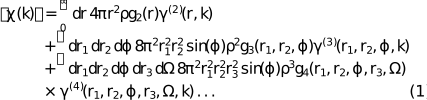 In equation (1) the n-body distribution functions are associated with the irreducible γ(n) (n-body) signals, usually calculated in the framework of the multiple-scattering theory. The integrals in equation (1) provide the correct configurational average 〈χ(k)〉 through the atomic density ρ and volume elements, and their effective distance sensitivity range is limited by mean free path effects in γ(n).
The structure of disordered condensed matter is also usually investigated by means of X-ray or neutron diffraction techniques (Fischer et al., 2006), in which the modulation of the scattering intensity is related to the static structure factor S(k) (here ℏk represents the exchanged momentum) associated with the pair distribution function g2(r) through the well known expression Equation (2) can be used to retrieve the g2(r) function, within the known limitations of the available k-range and inversion strategies.
Looking at equations (1) and (2), we can appreciate the complementarity between XAFS and diffraction techniques. The differences in the integral kernels correspond to specific sensitivities to short-range (XAFS) versus medium-range (diffraction) structure. Moreover, XAFS is potentially able to provide information beyond the pair distribution, being directly sensitive to local higher-order distribution functions.
In the presence of a multi-component system the possibility of selecting the X-ray absorption edge under investigation provides an additional insight. In favourable cases several XAFS spectra χα(k) associated with different chemical species α can be measured, each probing a limited number of partial distribution functions. Equation (1) can be generalized to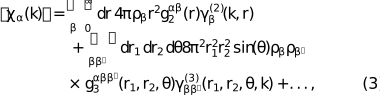 where the index β runs over the various chemical species and the integrals explicitly contain the partial pair
  and higher-order distributions, as well as the partial densities ρβ of each species.
Diffraction techniques, and in particular isotopic substitution in neutron diffraction, can often be exploited to obtain a sufficient set of independent experimental data sets in which the partial structure factors Sαβ(k), contributing with different weights, can be isolated (Fischer et al., 2006). In recent work, these techniques have been extended to high-pressure experiments and have also been applied to glassy and liquid matter (Salmon & Zeidler, 2015). In all of these cases XAFS can still provide useful complementary information that becomes essential especially for atoms with accessible edges and when useful isotopes are lacking.
The crucial quantities for calculation and modelling of the XAFS signal χ(k) are the distribution functions (g2, g3 …) and the n-body irreducible terms γ(n)({r}, k). These latter functions can be accurately calculated using modern multiple-scattering simulation techniques in the desired range of wavevectors k and general coordinates {r}. The γ(n)({r}, k) signals, for a given n-body arrangement, are oscillating functions in k-space with a typical frequency related to the n-body geometry, showing rapidly decaying amplitudes for increasing interatomic distances and k. Explicit calculations of the γ(n)({r}, k) signals are used to obtain structural information (g2, g3 …) by inversion of equations (1) and (3), using experimental χ(k) XAFS signals as mentioned in Section 2.
The application of equations (1) and (3) (which are of general validity) is less straightforward when dealing with small k values (k ≲ 4 Å−1) in the XANES (X-ray absorption near-edge structure) region. The combined effect of a longer electron mean free path and increased scattering amplitudes at low kinetic photoelectron energies makes the n-body expansion slowly convergent and consequently makes the inversion of equation (1) difficult. Moreover, the approximations for scattering potentials, based on the muffin-tin and complex and energy-dependent exchange-correlation terms, are likely to be less accurate near the edge, resulting in less reliable multiple-scattering calculations for the γ(n)({r}, k) signals. In the next section, we will briefly address possible inversion strategies for near-edge structures.
The simplest strategy for the structural refinement of XAFS data requires modelling of the gn({r}) distributions as a superposition of distinct peaks whose parameters are optimized to reproduce the experimental spectra (the `peak-fitting' technique). In disordered systems, peaks overlap in a continuous broadened distribution, usually showing at least a single distinct peak corresponding to the closest-neighbours distance. While the application of a peak-fitting strategy limited to the first peak is still reasonable, it has been shown that strong correlations between coordination numbers and shape parameters of the model distributions can lead to misleading results if the structural refinement is performed without constraints (Filipponi, 1994, 2001). For liquid systems, a simple but rigorous method to introduce physical constraints into a (model-dependent) peak-fitting approach has been introduced for monoatomic systems (Filipponi, 1994) and has been extended to ionic and metallic binary liquids (Di Cicco et al., 1997; Trapananti & Di Cicco, 2004).
Limiting our considerations to pair distributions in equation (3),  signals are used to calculate the XAFS signal associated with a given set of partial radial distribution functions. For practical purposes, the upper integration limit Rmax in equation (3) can usually be taken in the range 6–10 Å provided that a suitable smoothing window function (a half-Gaussian with a 1–2 Å width) is adopted to avoid truncation ripples. The
  signals, often calculated within the single-scattering approximation, oscillate in k with a leading phase term equal to 2kR (where R is the average interatomic distance) and their amplitude decreases exponentially with r due to the implicit mean free path effects. The XAFS signals corresponding to g2(r) distributions obtained by diffraction techniques or computer simulations can thus be safely calculated.
For many disordered systems, decomposition of the pair distribution into a set of well defined short-range peaks and a long-range tail has been shown to be an efficient scheme for deriving useful information about the shape of the distribution. Within this scheme, the partials gαβ(r) are optimized to reproduce the XAFS experimental spectra, taking into account the abovementioned physical constraints. This `peak-fitting' technique is usually able to reproduce the shape of the pair distribution with a limited set of parameters, allowing efficient inversion of the structural signals. Further details and applications of the `peak-fitting' approach, which is obviously a model-dependent inversion strategy, are reported in Section 4.
In order to implement a model-independent approach for the XAFS data analysis of disordered systems, several strategies have been proposed. The inversion of equation (3) is an ill-posed problem that requires a regularization scheme (Babanov et al., 1981) to obtain realistic and physically meaningful distribution functions. The inclusion of proper physical constraints in the n-body distributions related to the existence of a realistic three-dimensional atomic structure is naturally implemented in the reverse Monte Carlo (RMC) technique originally developed by McGreevy & Pusztai (1988) for the analysis of diffraction data. RMC schemes combining XAFS and diffraction data analysis have been proposed and implemented (see Di Cicco et al., 2003; Di Cicco & Trapananti, 2005 and references therein), showing the potential of this approach. Some applications of XAFS data analysis involving 3D modelling of the structure are reported in Section 5.
Computation of the XAFS structural signal in the so-called XANES region is increasingly complex and time-consuming, but the rich information content justifies present efforts in devising proper schemes for the data analysis of disordered systems. For example, the high sensitivity of XANES to higher-order distribution functions in liquid solutions had been discussed in the 1980s (Benfatto et al., 1986), and recent progress (see, for example, D'Angelo, Benfatto et al., 2002) has shown that reasonable structural refinements of the hydration shell can be obtained. For example, the elusive short-range structure and local geometry of Cu2+ ions in solution has been studied by several authors (for a combined XANES and XAFS study, see Frank et al., 2015). Generally speaking, XANES data of liquid and amorphous systems are usually very sensitive to the local geometry, including pair and higher-order distribution functions, but the large atomic cluster needed to reproduce the data and present approximations usually hinder the possibility of quantitative data analysis. Efforts to improve the inclusion of disorder effects for XANES calculations are still continuing at the time of writing.
The application of XAFS to condensed systems lacking crystalline order dates back to the early era of this spectroscopy, and contributed to clarification of the short-range nature of the technique. XAFS was first used to investigate the structure of amorphous systems (NiS alloys and germanium) in the late 1950s (Sawada et al., 1955; Shiraiwa et al., 1957), and research continued (see, for example, Nelson et al., 1962) until the publication of the seminal paper (Sayers et al., 1971) describing the application of the Fourier transform technique to the investigation of noncrystalline structures (applied to amorphous germanium). For a detailed account of early XAFS experiments, readers are referred to von Bordwehr (1989) and Filipponi (2001). The popularity of XAFS experiments greatly increased in the 1970s, prompted by the extensive usage of synchrotron-radiation sources and the availability of improved computing resources. For example, the element selectivity of XAFS was soon recognized as a valuable tool to investigate the environment of a solvated ion in dilute solutions, and average first hydration-shell distances around selected ions were determined (Eisenberger & Kincaid, 1975; Sandstrom et al., 1977; Sandstrom, 1979). Pioneering measurements of metallic and semiconducting liquids were also made at this time (Petersen & Kunz, 1975; Crozier et al., 1977; Crozier & Seary, 1980), and for liquid zinc (Crozier & Seary, 1980) and superionic conductors (Boyce et al., 1981) the importance of accounting for an asymmetric atomic distribution in the data analysis was emphasized. An account of experiments carried out on liquid and amorphous systems in the the first 15 years of synchrotron-radiation experiments is given in Crozier et al. (1988).
In several cases involving glasses or amorphous systems, but also in some notable liquid systems, the radial distribution g(r) = g2(r) displays an isolated `first-neighbours' peak that dominates the XAFS signal. Such a characteristic is schematically illustrated in Fig. 1 (solid curve) for an elemental system. The concept also applies to multi-elemental systems where all partial radial distribution functions are expected to present similar features.
![[Figure 1]](/figures/qx0040fig1thm.gif)
|
Schematic representation of typical radial distribution functions in the case of an isolated first-shell peak (solid line) or when the first-shell peak overlaps with the distribution of more distant neighbours (dashed line). |
The physical and chemical motivation for this kind of distribution of surrounding atoms resides in the existence of a strong first-neighbour bond and of well defined or constrained bond angles among the atoms in the surrounding structure, possibly of covalent origin, leading to a relatively open network. Examples of these structures can be found in all amorphous covalent solids, which are usually described in terms of continuous random networks, typically involving silicon, germanium, carbon and neighbouring threefold- or twofold-coordinated elements, all with well defined covalent bonding angles. Conceptually similar considerations apply to all network glasses such as silicate, chalcogenide and oxide glasses in general. Among the liquid systems, a particularly interesting case involves the hydration shell of strong electrolytes (typically highly charged cations) that are able to coordinate a small number of water molecules in an ordered shell with the O atom pointing towards the ion. The first shell in this case is composed of the O atoms (which are the main contributor to the XAFS) and H atoms of the coordinated water molecules.
In all the above cases a standard XAFS peak-fitting analysis is usually possible, providing useful information on the first-shell coordination numbers, average bond lengths, variances and possible asymmetry of the distribution. The investigation can usually also be performed as a function of temperature, a method that allows insight into the bond-force constants involved and the residual `static' disorder. This method can sometimes be extended to the second shell to provide information on bond-angle distributions in network systems.
Representative examples of early applications include an investigation of a-GexN1−x amorphous alloys (Boscherini et al., 1989) and the case of amorphous silicon (a-Si; Filipponi et al., 1990), where accounting for the second-shell signal and related multiple-scattering signals associated with the atomic triplet involving two adjacent bonds at the tetrahedral angle was required for an accurate analysis. The method was applied to several other disordered systems with a well defined g(r) peak, ranging for example from a-Ge in different thermodynamic conditions (Filipponi & Di Cicco, 1995; Coppari et al., 2009) to glassy and liquid selenium (see Di Cicco & Filipponi, 2015 and references therein) and GeSe2 (Properzi et al., 2015).
The XAFS technique has been extensively applied to understand the structure of network glasses. Both the silicon K edge and those of network-modifier cations have been investigated since the early days (Greaves et al., 1981, 1991) and XAFS data formed the basis for improved structure modelling (Vessal et al., 1992). More recently, the iron environment in CaO–FeO–2SiO2 silicate glasses was investigated (Rossano et al., 2000) to assess its role in the network.
A thorough investigation of the hydration properties of the transition-metal ions Zn2+, Co2+ and Ni2+ has been carried out by combining classical molecular-dynamics simulations and EXAFS spectroscopy (D'Angelo, Barone et al., 2002). These cations are characterized by a strong octahedral hydration geometry that has been carefully analyzed including multiple-scattering effects; the effects of more distant water molecules was found to be negligible. Also interesting is the evolution of the hydration shell through the lanthanide (Ln) series (from La3+ to Lu3+; Persson et al., 2008; D'Angelo et al., 2008, 2010), which showed that all of the Ln3+ hydration complexes retain a tricapped trigonal prism (TTP) geometry in which the bonding of the capping water molecules varies along the series. The Ln–O first-shell distances were found to monotonically decrease with increasing atomic number.
In the majority of liquid systems or highly disordered solids, even in the presence of a minimum interaction potential between nearest neighbours, the first-shell peak largely overlaps with the continuous distribution of possible atomic distances, as schematically illustrated in Fig. 1 (dashed curve). In `simple' liquids, such as molten salts and liquid metals (see, for example, Di Cicco, 1996; Di Cicco et al., 1997), the constrained peak-fitting method (Filipponi, 2001) mentioned in Section 2 was shown to represent a viable strategy for short-range structural refinement, even when using multiple-edge XAFS data analysis. However, correct application of the constrained peak-fitting method is not straightforward and cannot be easily extended to complex or multi-atomic liquids, leading to possibly erroneous results. In these cases, structural inversion strategies based on the reconstruction of realistic 3D models of the atomic structure may be adopted, as briefly reviewed in the next section.
XAFS structural refinement methods based on direct 3D modelling of the atomic structure provide an alternative data-analysis strategy that can overcome several limitations of the `peak-fitting' approach. In particular, the reverse Monte Carlo (RMC) method (McGreevy & Pusztai, 1988) has proven to be a very powerful tool for the reconstruction of the structure of disordered systems, and its initial application to XAFS dates back to Gurman & McGreevy (1990). RMC is described by the authors as the `inverse' of a standard Metropolis Monte Carlo simulation, in which the Markov chain of the computer simulation is used to converge to atomic structures compatible with a given data set rather than with a given interatomic potential. Atomic positions are moved thousands of times according to the standard Metropolis algorithm using an acceptance criterion based on the evolution of a residual χ2 on the available data.
As the XAFS signal is essentially blind to medium-range and long-range order, realistic refinements of the structure of a disordered system can be obtained by combining diffraction and XAFS data in the RMC refinement process. In principle, the RMC method can be applied to data of different origins, producing atomic configurations compatible with a given set of experiments. Modern versions of RMC programs include the possibility of combining diffraction and EXAFS data (Di Cicco et al., 2003; Gereben et al., 2007). The method (RMC-GNXAS) has been implemented for XAFS data analysis of disordered structures (Di Cicco & Trapananti, 2005) by introducing a χ2 function (at each RMC step) given by where in the first term on the right-hand side χC is calculated starting from the actual atomic coordinates and the γ(2) signals (see equation 1), χE is the raw XAFS signal and
  is the noise function obtained from the experiment. In the second term,
  is the pair distribution associated with the atomic coordinates of the RMC box,
  is a model pair distribution obtained by neutron/X-ray diffraction or computer simulations and
  is the variance associated with the pair distribution. Faster convergence rates can be achieved by preparing an initial structure compatible with the pair distribution function
  chosen for the minimization in equation (4). Clearly, the χ2 defined in equation (4) can be modified in order to accommodate experimental data of different origins and extended to multiple-edge and multi-atomic cases (for which partial distribution functions have to be introduced). Moreover, different constraints can easily be introduced in the simulation process, such as bonding properties and local geometry. In recent times, RMC refinements have successfully been extended and validated for multi-atomic and multiple-edge experiments (Di Cicco et al., 2018; Iesari et al., 2020), and efforts to include multiple-scattering terms are continuing at the time of writing.
The application of RMC to XAFS data for liquid metals (Di Cicco et al., 2003, 2006, 2014) has shown that reliable model-independent pair distribution functions can be extracted by considering both XAFS and diffraction g(r) data for short-range and medium/long-range correlations, respectively. The RMC reconstruction of realistic 3D structures for these liquids has allowed detailed studies of the local geometry of liquid and undercooled liquids. The example of the investigation of elemental nickel (Di Cicco et al., 2014) is reproduced in Fig. 2. In general, it has been shown that in several liquid metals the icosahedral short-range ordering (ISRO), probed by common-neighbour (CNA) and spherical invariant ( ) analysis, involves a limited fraction of local atomic configurations.
![[Figure 2]](/figures/qx0040fig2thm.gif)
Hybrid 3D modelling methods such as empirical potential structure refinement (EPSR; Soper, 2005) have also been developed, combining the strengths of conventional computer simulation approaches with reverse-modelling methods driven from experiments. Successful applications of the EPSR method to XAFS, X-ray and neutron diffraction data have included detailed structural refinement of metal-ion solvation and local structure in different aqueous solutions (see Bowron & Moreno, 2014 and references therein).
Investigations of metallic glasses is another active field of research which has involved XAS experiments and extensive modelling since the beginning (see, for example, Mobilio & Incoccia, 1984). Early applications (Kizler, 1991) were also performed in the XANES range. Current research often exploits a combination of experimental techniques and RMC modelling (Sheng et al., 2006; Pethes et al., 2016) due to the presence of several atomic species and large disorder. Similar considerations apply to other technologically relevant materials such as GST-based alloys (Jóvári et al., 2008).
These applications and results confirm the important role of XAFS experiments for disordered systems, for which useful and reliable information about the local structure can be obtained using proper data-analysis strategies.
Disclaimer. Owing to the large body of work that this section aimed to cover, for reasons of practicality the authors were forced to limit the number of references selected for inclusion in the bibliography. We acknowledge that as a result many important papers have not been cited, and for this we sincerely apologize to those colleagues affected and ask for their kind understanding.
References
 Babanov, Y. A., Vasin, V. V., Ageev, A. L. & Ershov, N. V. (1981). Phys. Status Solidi B, 105, 747–754.Google ScholarBenfatto, M., Natoli, C. R., Bianconi, A., Garcia, J., Marcelli, A., Fanfoni, M. & Davoli, I. (1986). Phys. Rev. B, 34, 5774–5781.Google ScholarBordwehr, R. S. von (1989). Ann. Phys. Fr. 14, 377–400.Google ScholarBoscherini, F., Filipponi, A., Pascarelli, S., Evangelisti, F., Mobilio, S., Marques, F. & Chambouleyron, I. (1989). Phys. Rev. B, 39, 8364–8370.Google ScholarBowron, D. T. & Diaz Moreno, S. (2014). Coord. Chem. Rev. 277–278, 2–14.Google ScholarBoyce, J. B., Hayes, T. M. & Mikkelsen, J. C. Jr (1981). Phys. Rev. B, 23, 2876–2896.Google ScholarCoppari, F., Chervin, J., Congeduti, A., Lazzeri, M., Polian, A., Principi, E. & Di Cicco, A. (2009). Phys. Rev. B, 80, 115213.Google ScholarCrozier, E. D., Lytle, F. W., Sayers, D. E. & Stern, E. A. (1977). Can. J. Chem. 55, 1968–1974.Google ScholarCrozier, E. D., Rehr, J. J. & Ingalls, R. (1988). X-ray Absorption: Principles, Applications, Techniques of EXAFS, SEXAFS and XANES, edited by D. C. Koningsberger & R. Prins, pp. 375–384. New York: Wiley.Google ScholarCrozier, E. D. & Seary, A. J. (1980). Can. J. Phys. 58, 1388–1399.Google ScholarD'Angelo, P., Barone, V., Chillemi, G., Sanna, N., Meyer-Klaucke, W. & Pavel, N. (2002). J. Am. Chem. Soc. 124, 1958–1967.Google ScholarD'Angelo, P., Benfatto, M., Della Longa, S. & Pavel, N. V. (2002). Phys. Rev. B, 66, 064209.Google ScholarD'Angelo, P., De Panfilis, S., Filipponi, A. & Persson, I. (2008). Chem. Eur. J. 14, 3045–3055.Google ScholarD'Angelo, P., Zitolo, A., Migliorati, V. & Persson, I. (2010). Chem. Eur. J. 16, 684–692.Google ScholarDi Cicco, A. (1996). Phys. Rev. B, 53, 6174–6185.Google ScholarDi Cicco, A. & Filipponi, A. (2015). X-ray Absorption Spectroscopy of Semiconductors, edited by C. S. Schnohr & M. C. Ridgway, pp. 187–200. Berlin, Heidelberg: Springer.Google ScholarDi Cicco, A., Iesari, F., De Panfilis, S., Celino, M., Giusepponi, S. & Filipponi, A. (2014). Phys. Rev. B, 89, 060102.Google ScholarDi Cicco, A., Iesari, F., Trapananti, A., D'Angelo, P. & Filipponi, A. (2018). J. Chem. Phys. 148, 094307.Google ScholarDi Cicco, A., Minicucci, M. & Filipponi, A. (1997). Phys. Rev. Lett. 78, 460–463.Google ScholarDi Cicco, A. & Trapananti, A. (2005). J. Phys. Condens. Matter, 17, S135–S144.Google ScholarDi Cicco, A., Trapananti, A., Faggioni, S. & Filipponi, A. (2003). Phys. Rev. Lett. 91, 135505.Google ScholarDi Cicco, A., Trapananti, A., Principi, E., De Panfilis, S. & Filipponi, A. (2006). Appl. Phys. Lett. 89, 221912.Google ScholarEisenberger, P. & Kincaid, B. M. (1975). Chem. Phys. Lett. 36, 134–136.Google ScholarFilipponi, A. (1994). J. Phys. Condens. Matter, 6, 8415–8427.Google ScholarFilipponi, A. (2001). J. Phys. Condens. Matter, 13, R23–R60.Google ScholarFilipponi, A. & Di Cicco, A. (1995). Phys. Rev. B, 51, 12322–12336.Google ScholarFilipponi, A., Di Cicco, A., Benfatto, M. & Natoli, C. R. (1990). Europhys. Lett. 13, 319–325.Google ScholarFilipponi, A., Di Cicco, A. & Natoli, C. R. (1995). Phys. Rev. B, 52, 15122–15134.Google ScholarFischer, H. E., Barnes, A. C. & Salmon, P. S. (2006). Rep. Prog. Phys. 69, 233–299.Google ScholarFrank, P., Benfatto, M., Qayyam, M., Hedman, B. & Hodgson, K. O. (2015). J. Chem. Phys. 142, 084310.Google ScholarGereben, O., Jóvári, P., Temleitner, L. & Pusztai, L. (2007). J. Optoelectron. Adv. Mater. 9, 3021–3027.Google ScholarGreaves, G. N., Fontaine, A., Lagarde, P., Raoux, D. & Gurman, S. J. (1981). Nature, 293, 611–616.Google ScholarGreaves, G. N., Gurman, S. J., Catlow, C. R. A., Chadwick, A. V., Houde-Walter, S., Henderson, C. M. B. & Dobson, B. R. (1991). Philos. Mag. A, 64, 1059–1072.Google ScholarGurman, S. J. & McGreevy, R. L. (1990). J. Phys. Condens. Matter, 2, 9463–9473.Google ScholarIesari, F., Trapananti, A., De Panfilis, S. & Di Cicco, A. (2020). Radiat. Phys. Chem. 175, 108089.Google ScholarJóvári, P., Kaban, I., Steiner, J., Beuneu, B., Schöps, A. & Webb, M. A. (2008). Phys. Rev. B, 77, 035202.Google ScholarKizler, P. (1991). Phys. Rev. Lett. 67, 3555–3558.Google ScholarMcGreevy, R. L. & Pusztai, L. (1988). Mol. Simul. 1, 359–367.Google ScholarMobilio, S. & Incoccia, L. (1984). Il Nuovo Cimento D, 3, 846–866.Google ScholarNelson, W. F., Siegel, I. & Wagner, R. W. (1962). Phys. Rev. 127, 2025–2027.Google ScholarPersson, I., D'Angelo, P., De Panfilis, S., Sandström, M. & Eriksson, L. (2008). Chem. Eur. J. 14, 3056–3066.Google ScholarPetersen, H. & Kunz, C. (1975). Phys. Rev. Lett. 35, 863–866.Google ScholarPethes, I., Kaban, I., Stoica, M., Beuneu, B. & Jóvári, P. (2016). arXiv:1605.09127.Google ScholarProperzi, L., Di Cicco, A., Nataf, L., Baudelet, F. & Irifune, T. (2015). Sci. Rep. 5, 10188.Google ScholarRossano, S., Ramos, A., Delaye, J.-M., Creux, S., Filipponi, A., Brouder, C. & Calas, G. (2000). Europhys. Lett. 49, 597–602.Google ScholarSalmon, P. S. & Zeidler, A. (2015). J. Phys. Condens. Matter, 27, 133201.Google ScholarSandstrom, D. R. (1979). J. Chem. Phys. 71, 2381–2386.Google ScholarSandstrom, D. R., Dodgen, H. W. & Lytle, F. W. (1977). J. Chem. Phys. 67, 473–476.Google ScholarSawada, M., Tsutsumi, K., Shiraiwa, T. & Obashi, M. (1955). J. Phys. Soc. Jpn, 10, 464–468.Google ScholarSayers, D. E., Stern, E. A. & Lytle, F. W. (1971). Phys. Rev. Lett. 27, 1204–1207.Google ScholarSheng, H. W., Luo, W. K., Alamgir, F. M., Bai, J. M. & Ma, E. (2006). Nature, 439, 419–425.Google ScholarShiraiwa, T., Ishimura, T. & Sawada, M. (1957). J. Phys. Soc. Jpn, 12, 788–792.Google ScholarSoper, A. K. (2005). Phys. Rev. B, 72, 104204.Google ScholarTrapananti, A. & Di Cicco, A. (2004). Phys. Rev. B, 70, 014101.Google ScholarVessal, B., Greaves, G. N., Marten, P. T., Chadwick, A. V., Mole, R. & Houde-Walter, S. (1992). Nature, 356, 504–506.Google Scholar

